
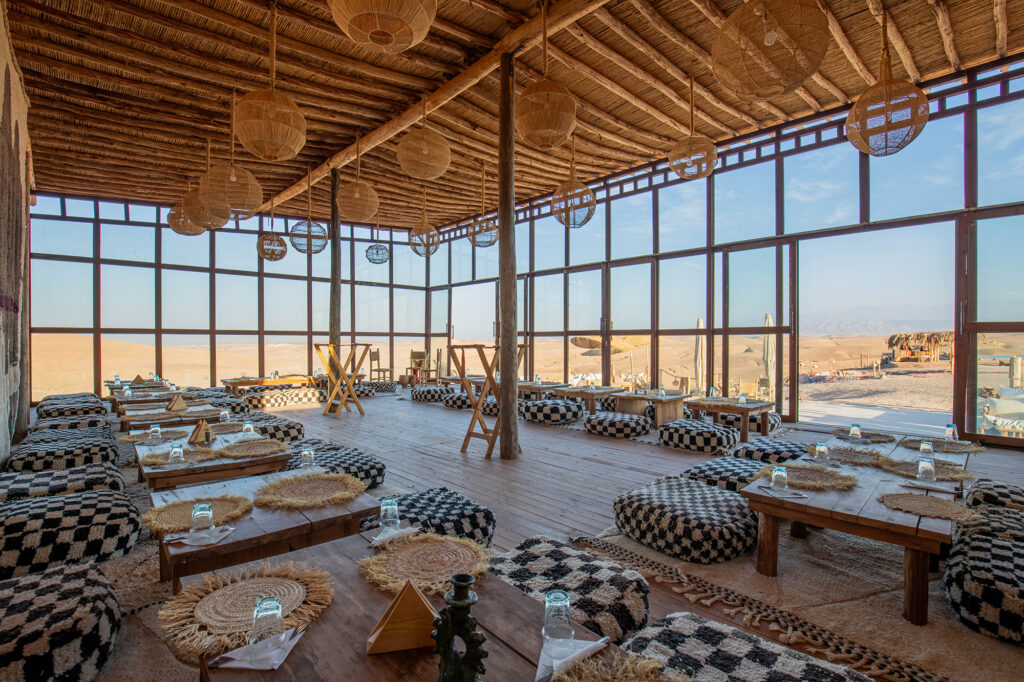
The Secret of the Sands: Discovering the Art of Berber Bread and Desert Gastronomy at Alkamar Camp
In the world of luxury travel, “authenticity” is often a buzzword used to describe surface-level experiences. However, at Alkamar Camp, we believe that true authenticity is found in the sensory details of daily life—the smell of woodsmoke at dawn, the texture of hand-kneaded dough, and the ancient taste of bread baked directly in the embers of a desert fire.
For the traveler visiting the Agafay Desert near Marrakech in 2026, the most profound luxury isn’t just a high-end suite; it is the opportunity to participate in a culinary tradition that has remained unchanged for millennia. This is a journey into the heart of Berber gastronomy, where bread is not just food—it is a sacred symbol of life, hospitality, and the desert’s resilience.
1. More Than a Staple: The Sacred Role of Bread in Berber Culture
To understand the gastronomy of the desert, one must first understand the role of bread, or Aghroum in the Amazigh (Berber) language. For the nomadic and semi-nomadic tribes of Morocco, bread is the sun around which all meals orbit. It is the plate, the utensil, and the sustenance that fuels long journeys across the rocky plateaus.
In the Berber tradition, bread is handled with immense respect. It is never cut with a knife, but always broken by hand to symbolize the sharing of life. At Alkamar Camp, we bring this philosophy to your table, ensuring that every meal begins with this fundamental connection to the land and its people.
2. The Alchemy of the Desert: How Berber Bread is Born
The beauty of desert cooking lies in its simplicity and its reliance on the elements: earth, fire, water, and air. At our camp, we invite guests to witness—and participate in—the alchemy of bread making.
The Ingredients of the Earth
The recipe is deceptively simple: fine semolina, flour, water, a pinch of salt, and a touch of natural yeast. However, the secret is in the quality. We source our grains from local cooperatives that support traditional farming practices, ensuring that the flour retains its earthy, nutty flavor.
The Art of the Knead
Kneading is a rhythmic, almost meditative process. Under the guidance of our local Berber chefs, you will learn the “folding” technique used for generations. It is a physical conversation between the baker and the dough, adjusting for the dry desert air and the heat of the day.
3. Fire and Sand: The Traditional Baking Methods
One of the highlights of the best desert camp experience in Morocco is seeing how bread is baked without a modern oven. We utilize two primary traditional methods at Alkamar Camp:
The Tafarnout Oven
The Tafarnout is a traditional clay oven, often found in Berber villages. It is heated with wood and dried palm fronds until the stones at the bottom are glowing. The flat dough is slapped against the hot clay walls or placed on the stones, resulting in a bread that is blistered, smoky, and irresistibly crispy on the outside while remaining soft and airy inside.
Aghroum n’Tafarnout (The Sand Bread)
For the true adventurer, we demonstrate the ancient nomadic method of baking bread directly in the sand and embers of a campfire. The ground is heated by a fire, the embers are swept aside, and the dough is placed directly on the hot earth and covered with warm ash. After a few minutes, the bread is unearthed, dusted off, and served hot. The result is a surprisingly clean, deeply flavored loaf that tastes of the desert itself.
4. A Deep Dive into Desert Gastronomy: Beyond the Bread
While bread is the foundation, gastronomy at Alkamar Camp is a multi-layered exploration of Moroccan flavors. Our culinary team takes the “Farm-to-Table” concept and applies it to the desert (Farm-to-Dune).
The Slow-Cooked Tagine
A winter stay in January is the perfect time for a slow-cooked tagine. Whether it is lamb with prunes and toasted almonds or a vibrant vegetable medley infused with saffron from Taliouine, the tagine is the centerpiece of the romantic dinner in the Agafay desert. The slow steam-cooking inside the conical clay pot ensures that the meat is tender enough to be eaten with nothing but a piece of your freshly baked Berber bread.
The Spice Palette
Moroccan cuisine is a masterclass in the balance of spices. You will taste the warmth of cumin, the earthiness of turmeric, the sweetness of cinnamon, and the slight kick of ginger. In our cooking workshops, we explain the medicinal and culinary properties of these spices, many of which are harvested in the fertile valleys surrounding the Atlas Mountains.
5. The Tea Ceremony: The Desert’s “Whiskey”
No culinary deep dive in Morocco is complete without the tea ceremony. Known jokingly as “Berber Whiskey,” Moroccan mint tea is a symbol of hospitality.
At Alkamar Camp, we perform the tea ceremony as the sun sets over the Agafay hills. The high pour (to create the “turban” of foam) aerates the tea and releases the aroma of fresh nana mint and gunpowder green tea. It is the perfect digestive and a beautiful ritual to mark the transition from day to night.
6. Why Culinary Tourism is the New Luxury
In 2026, luxury is no longer defined by what you can buy, but by what you can learn and feel.
Choosing a luxury desert camp near Marrakech that prioritizes culinary heritage allows you to connect with Morocco on a cellular level. When you bake bread with a Berber chef, you aren’t just a tourist; you are a guest in a culture that has survived and thrived for centuries.
At Alkamar Camp, we provide the comfort of a five-star lodge, but we keep the soul of the desert in our kitchen. We believe that the most expensive spice in the world isn’t saffron—it’s time. The time taken to knead by hand, to slow-cook over embers, and to share a meal under the stars.
7. Plan Your Culinary Escape to Agafay
If you are a food lover, a culture seeker, or someone who simply appreciates the finer, slower things in life, a stay at Alkamar Camp is a must.
- Duration: We recommend a minimum of two nights to fully immerse yourself in our culinary workshops.
- Season: January and February offer the perfect “cool” weather for baking over open fires and enjoying hearty tagines.
- Personalization: Our chefs are happy to cater to dietary restrictions (vegan, gluten-free) while still maintaining the integrity of traditional flavors.
Join us this season and discover why the simplest things—bread, fire, and salt—create the most luxurious memories.